Friday, 13 April 2012


Rebellious student
  
April 13, 2012
  
Greetings!
  
Yesterday, Richard Alm of Vancouver, B.C. wrote, "I recently completed 151 of the 300 11" x 14"s you requested as part of the "Genn School of Go-To-Your-Room." I'm getting very itchy to do some larger ones. Do you permit making larger ones from the better of your smaller ones before the 300 have been completed?"
  
Thanks, Richard. When we last spoke I also suggested you follow your nose and don't pay too much attention to any instructor, including me. I thought I also implied that those small paintings might be done concomitantly with any other work you might have in mind. If I missed this point, I apologize. We've put a selection of Richard's sketches at the top of the current clickback.
  
As an artist I believe in free will--but I also believe in preparatory exercises. Whether a series of exploratory roughs, comps, a-painting-a-day, or thumbnails before a more ambitious project, sketches pave the way to professionalism. Here's a reminder of what sketches can do for you:
  
+ Make your mistakes smaller, not larger.

+ By including "notan" sketches (simple black and white patterns) you learn to find better compositions.

+ Discover the best angles, aspects and forms of a subject.

+ Learn to work fresher and looser so you'll have less investment and obligation. 

+ Ask yourself, "What could be?" and have more fun wherever you go.

+ Make more sense of your visual world and its manifestation in your art. Preparatory sketches help you understand what you are trying to do while helping you to feel less precious about your work.

Small works tend to be automatically stronger. For one thing they seem to more easily take up the whole picture plane. Further, you need not make your smaller works too comprehensive (This may be a problem with your sketches, Richard--they look like they're trying to burst their britches and become larger paintings). Being a basically contrary person myself, I find it useful to ask, "What do I want to do today?" A sketch in the cold grey light of dawn often takes just a few minutes to find the way. Big, small, difficult, easy--the day's karma appears like a genie. Then there's nothing to it but to do it.

Best regards,
  
Robert

PS: "Forewarned, forearmed; to be prepared is half the victory." (Miguel de Cervantes) "Failure to prepare is preparing to fail." (Benjamin Franklin)

Esoterica: Life is an exercise, but it's not a rehearsal. Many artists find that the sketch stage is just as vital and rewarding as themagnum opus that comes later. Sketches, to the dismay of many artists, may even be superior in quality. Particularly in rough form, it's important to cave in to your most expedient inclinations, happiest pathways and most endearing sensibilities. "Preparation does not take away any of the enthusiasm of the final painting. In fact, the preliminaries in color and tonal studies free up the artist for an unbridled yet focused trip to the finish." (Harley Brown)


Current Clickback: "The happiness factor" looks at happiness and togetherness. Your comments will be appreciated.

Read this letter online and share your thoughts on preparing to paint by sketching. Live comments are welcome. Direct, illustratable comments can be made at rgenn@saraphina.com

The Art Show Calendar: If you or your group has a show coming up, put an illustrated announcement on The Painter's Keys site. The longer it's up, the more people will see it. Your announcement will be shown until the last day of your show.

The Workshop Calendar: Here is a selection of workshops and seminars laid out in chronological order that will stimulate, teach, mentor, take you to foreign lands or just down the street. Many of these workshops are recommended by Robert and friends. Incidentally, if you are planning a workshop and have photos of happy people working, feel free to send them to us and we'll include a selection in the workshops feature at no extra charge.

The Painter's Post: Every day new material is going into this feature. Links to art info, ideas, inspiration and all kinds of creative fun can be found in this online arts aggregator.

If a friend is trying to subscribe to the Twice-Weekly Letter via Constant Contact, please let her or him know that confirmation is required and to reply to Constant Contact's confirmation email.

You can also follow Robert's valuable insights and see further feedback on Facebook and Twitter

Richard Alm wouldn't mind a second opinion at almedti@telus.net

Featured Responses: Alternative to the instant Live Comments, Featured Responses are illustrated and edited for content. If you would like to submit your own for possible inclusion, please do so. Just click 'reply' on this letter or write to rgenn@saraphina.com

Yes, please go ahead and forward this letter to a friend. This does not mean that they will automatically be subscribed to the Twice-Weekly Letter. They have to do it voluntarily and can find out about it by going to The Painter's Keys website.
Subscribe Free!
Your name and email
address will be kept safe.
To Unsubscribe or Change Your Email Address, please click Safe Unsubscribe or Update Profile/Email Address links found at the bottom of this email.

(c) Copyright 2012 Robert Genn. If you wish to copy this material to other publications or mail lists, please ask for permission by writingrgenn@saraphina.com. Thanks for your friendship. 

Tuesday, 10 April 2012


The happiness factor

April 9, 2012

Greetings!

According to the recently released UN World Happiness Report, Canada's population is the fifth happiest in the world. Denmark, Norway, Finland and the Netherlands, in that order, are happier. The USA ranks 11th, the UK 18th. According to the report, Togo, Benin, Central African Republic and Sierra Leone had the most unhappy people.
  
Apart from income, the greatest determinants of human happiness are family ties and tribal instincts. A lot has been made of the fact that the happiest nations are Northern ones where the citizens struggle together against an inclement environment. If this were true it seems to me the Russians would be rated happier, but they're not. The only time you see them get up on the table and dance is after 14 vodkas. And, as everyone knows, Mexican babies are by far the happiest. Check out a Mexican day care sometime. Further, if tribalism is so hot, you'd think some of the Middle Eastern nations would be up there, too.
  
Statistics tell us that happy nations have a lot of clubs. Canada is awash with them. What self-respecting prairie town doesn't have a quilting group? What church basement in the Great White North doesn't have a Thursday Painting and Sketch Club where nodders endure a "short meeting and financial report" before the night's featured demo-doer? We Canucks are such a happy bunch.
  
But what about the art that issues from all this glee? Do tribalism and togetherness improve creative quality? Some people will swear on a stack of Robert's Rules of Order that they do. Others are not so sure. In my humble observation, artists who struggle on their own generally do best. Are these just a few of the unhappy loners who are chasing their tails, hell bent on throwing a monkey wrench into our uncontrolled laughing?

It seems to me the best club is the Great Universal Brotherhood and Sisterhood of Painters Dead and Alive (GUBSPDA). It's sort of virtual but it meets 24/7. The last person who signed up for these free Twice-Weekly Letters at one minute to midnight yesterday was Shailaja Poddar of Hyderabad, Andhra Pradesh, India. Somehow I think we are all a bit happier when we admit we're in this together.

Best regards,

Robert

PS: "It's not in the pursuit of happiness that we find fulfillment, it's in the happiness of pursuit." (Denis Waitley)

Esoterica: Art clubs and guilds are primarily a North American and UK phenomenon, although some other nations are catching on. A club's main thrusts are mutual learning, gentle competition, networking and marketing. Clubs tend to neutralize the traditional model of rugged individualism and egocentricity that many now see as a hazard to the growth of quality and integrity. In clubs, in theory, all is fair. The strong are encouraged to encourage the weak until the weak become strong. That's when the formerly weak tend to leave the happy club and strike out on their own.


Current Clickback: "Does creative capability decline?" questions the process of aging and creative ability. Your comments will be appreciated.

Read this letter online and share your thoughts about the chance of happiness. Live comments are welcome. Direct, illustratable comments can be made at rgenn@saraphina.com

The Art Show Calendar: If you or your group has a show coming up, put an illustrated announcement on The Painter's Keys site. The longer it's up, the more people will see it. Your announcement will be shown until the last day of your show.

The Workshop Calendar: Here is a selection of workshops and seminars laid out in chronological order that will stimulate, teach, mentor, take you to foreign lands or just down the street. Many of these workshops are recommended by Robert and friends. Incidentally, if you are planning a workshop and have photos of happy people working, feel free to send them to us and we'll include a selection in the workshops feature at no extra charge.

The Painter's Post: Every day new material is going into this feature. Links to art info, ideas, inspiration and all kinds of creative fun can be found in this online arts aggregator.

If a friend is trying to subscribe to the Twice-Weekly Letter via Constant Contact, please let her or him know that confirmation is required and to reply to Constant Contact's confirmation email.

You can also follow Robert's valuable insights and see further feedback on Facebook and Twitter

Please welcome Shailaja Poddar at Shailaja1809@gmail.com 

Featured Responses: Alternative to the instant Live Comments, Featured Responses are illustrated and edited for content. If you would like to submit your own for possible inclusion, please do so. Just click 'reply' on this letter or write to rgenn@saraphina.com

Yes, please go ahead and forward this letter to a friend. This does not mean that they will automatically be subscribed to the Twice-Weekly Letter. They have to do it voluntarily and can find out about it by going to The Painter's Keys website.
Subscribe Free!
Your name and email
address will be kept safe.
To Unsubscribe or Change Your Email Address, please click Safe Unsubscribe or Update Profile/Email Address links found at the bottom of this email.

(c) Copyright 2012 Robert Genn. If you wish to copy this material to other publications or mail lists, please ask for permission by writingrgenn@saraphina.com. Thanks for your friendship. 

Tuesday, 3 April 2012


Wonderful faces

April 3, 2012

Greetings!

Last Friday I saw the Norman Rockwell exhibition at the Winnipeg Art Gallery. Having seen it twice before in other cities, this time I concentrated on the stylistic changes throughout the artist's lifetime.

Norman Rockwell (1894-1978) was the best known illustrator of what is often called America's Golden Age. The butt of jokes by many critics, his popularity continues to rise. Unlike a great deal of art in public galleries these days, Rockwell's work is still connecting. The gallery was jammed with a cross-section of age and ethnicity. Apart from popularity, Rockwell may be one of the more interesting and valuable studies for artists.

From his first Saturday Evening Post cover (May 1, 1916--a rich kid pushing his baby sister in a buggy while bully-boys jeer) when he was 23 years old, to his last (Dec 14, 1963--a portrait of the recently assassinated JFK), Rockwell painted 332 Post covers. Following these in chronological order is an education in the growth of capability, the progress of style, and the transformation of the artist.

In the earliest covers we see the eagerness of a young, growing mind--often wooden gestures and overworked, theoretical faces. By his twenties and into his thirties we begin to see the well-defined personalities of his subjects. We also gain a new understanding of the power of symmetry, silhouette, vignette and devices like legs and arms as vehicles of expression. Sophisticated colour and fine, painterly surfaces begin to appear. Strokes become caresses of painterly love. Finally, in later life, we see Rockwell tightening up, become more photo-dependent, less stylish, less sensitive to colour and less confident of his craft. 

More than anything, we see an artist taking a lifetime to find out what he does well (faces in profile, expression of human nature and character, for example), and what he doesn't do so well (wide-angle scenes, crowds and overly complex busyness). Some of the middle-period magazine illustrations such as Checkers, (1928) and a Colgate toothpaste ad (1924) rival the masters in characterization and gesture. We've illustrated these and others at the top of the current clickback.

Best regards,

Robert

PS: "I paint life as I would like it to be." (Norman Rockwell) 

Esoterica: Things were not always easy for Rockwell. In his third illustration for Post, Grandpa at the Plate, the work was returned to the artist twice before he finally got it right. We begin to understand the symbiosis between art director and illustrator, just as artists have catered to patrons throughout history. Catering, by expanding demands on an artist, can be key to greater craft and technique. This sort of fine tuning set Rockwell up to paint the FDR-inspired Four Freedoms (speech, worship, want and fear) of 1943, prompting the largest wartime bond drive in American history. In all their integrity and passion, these paintings deserve to be seen by each new generation. Looking at the people looking at the Rockwells, I was having Rockwellian moments--our world sure has lots of wonderful faces. 


Current Clickback: "Talkers and doers" looks at what happens when we talk about our work. Your comments will be appreciated.

Read this letter online and share your thoughts on catering to clients. Live comments are welcome. Direct, illustratable comments can be made at rgenn@saraphina.com

Back by popular demand! One great big fat FREE book!! Yep, a totally free copy of Robert's most celebrated book, The Twice-Weekly LETTERS--960 pages--mailed post-free anywhere in the world, simply by signing up for a Premium Listing before March 31, 2012. If you have work you think the world should see, please check us out. While our listings are mini-websites in themselves, we are particularly good at sending volumes of visitors to websites you may already have. Our service costs $100 per year and we do all the set up, including changing work, etc, as you see fit. If you are thinking about it, please feel free to drop Robert a note. He'll be happy to pass along an opinion as to your work's suitableness.

The Art Show Calendar: If you or your group has a show coming up, put an illustrated announcement on The Painter's Keys site. The longer it's up, the more people will see it. Your announcement will be shown until the last day of your show.

The Workshop Calendar: Here is a selection of workshops and seminars laid out in chronological order that will stimulate, teach, mentor, take you to foreign lands or just down the street. Many of these workshops are recommended by Robert and friends. Incidentally, if you are planning a workshop and have photos of happy people working, feel free to send them to us and we'll include a selection in the workshops feature at no extra charge.

The Painter's Post: Every day new material is going into this feature. Links to art info, ideas, inspiration and all kinds of creative fun can be found in this online arts aggregator.

If a friend is trying to subscribe to the Twice-Weekly Letter via Constant Contact, please let her or him know that confirmation is required and to reply to Constant Contact's confirmation email.

You can also follow Robert's valuable insights and see further feedback on Facebook and Twitter

Featured Responses: Alternative to the instant Live Comments, Featured Responses are illustrated and edited for content. If you would like to submit your own for possible inclusion, please do so. Just click 'reply' on this letter or write to rgenn@saraphina.com

Yes, please go ahead and forward this letter to a friend. This does not mean that they will automatically be subscribed to the Twice-Weekly Letter. They have to do it voluntarily and can find out about it by going to The Painter's Keys website.
Subscribe Free!
Your name and email
address will be kept safe.
To Unsubscribe or Change Your Email Address, please click Safe Unsubscribe or Update Profile/Email Address links found at the bottom of this email.

(c) Copyright 2012 Robert Genn. If you wish to copy this material to other publications or mail lists, please ask for permission by writingrgenn@saraphina.com. Thanks for your friendship. 

Friday, 30 March 2012


Talkers and doers

March 30, 2012

Greetings!

When I was a poverty stricken student at Art Center School in Los Angeles I was frequently called in to see Karla Martell, the registrar. Tardy payment of fees was one of the reasons for my summoning, but more than once she spoke of my failure as a student and as a human being. "Looking over the reports from your instructors," she said, "they are pretty well consistent in saying that you talk a good job and do a poor one."

Shocked as I was at the time, I decided on a vow of silence and to henceforth "understate and over-prove." Overnight I became the "Silent Sam" of the classroom. Karla's warning was an epiphany. I turned a new leaf.

More and more in later years I've come to realize that shutting up is not only cathartic, it's a positive technique for quality control and improvement. Folks who know me well often remark on my reluctance to talk about my own work and my habit of dragging on about the work of others. Here's why:

When you talk, you gradually lose your need to do. Each word is a brick removed from the wall of your desire. When you tell someone, you let the wolverine out of the oil drum and spoil the excitement of the final unveiling. Your creativity is like a dam where the floodgates must be opened only at your choosing. A crack will leak the power that lies within.

Silence focuses your eyes on your process. When you do not surround or precede your effort with your own verbiage, meaning and purpose are more likely to come out of the end of your brush. Literary considerations (the red barn and the golden sunset), the bane of visual workers, are kept in a holding cell until court can be held.

We all know of people who constantly talk about how they are going to do this and that. While it's upsetting to them, it's often worthwhile to let them know the reason they are not doing it is because they are talking about doing it. No matter how you encourage talkers to get on with it, it's been my observation that talkers generally keep on talking and are most highly realized when they are in groups, conferences, classrooms, lectures and social events. Doers generally have their workplace already set up, are naturally drawn to their tools, and are comfortable not saying much about what they're up to. Some of us have to learn that. 

Best regards,

Robert

PS: "Silence is a source of great strength." (Lao Tzu) "Drink at the source and speak no word." (Fyodor Ivanovich Tyutchev) "Learn silence. With the quiet serenity of a meditative mind, listen, absorb, transcribe, and transform." (Pythagoras) "A closed mouth gathers no foot." (Frank Tyger) 

Esoterica: The Zen-like trance of silent working precludes overly-optimistic planning and poor-me whining. Yes, you can pipe music into your head--but be yourself mute. "Remain quiet," saysParamanhansa Yogananda. "Don't feel you have to talk all the time. Go within and you will see the loveliness behind all beauty."


Current Clickback: "Look who's buying art now" looks at the changing profile of art buyers. Your comments will be appreciated.

Read this letter online and share your thoughts on talking about your work. Live comments are welcome. Direct, illustratable comments can be made at rgenn@saraphina.com

Back by popular demand! One great big fat FREE book!! Yep, a totally free copy of Robert's most celebrated book, The Twice-Weekly LETTERS--960 pages--mailed post-free anywhere in the world, simply by signing up for a Premium Listing before March 31, 2012. If you have work you think the world should see, please check us out. While our listings are mini-websites in themselves, we are particularly good at sending volumes of visitors to websites you may already have. Our service costs $100 per year and we do all the set up, including changing work, etc, as you see fit. If you are thinking about it, please feel free to drop Robert a note. He'll be happy to pass along an opinion as to your work's suitableness.

The Art Show Calendar: If you or your group has a show coming up, put an illustrated announcement on The Painter's Keys site. The longer it's up, the more people will see it. Your announcement will be shown until the last day of your show.

The Workshop Calendar: Here is a selection of workshops and seminars laid out in chronological order that will stimulate, teach, mentor, take you to foreign lands or just down the street. Many of these workshops are recommended by Robert and friends. Incidentally, if you are planning a workshop and have photos of happy people working, feel free to send them to us and we'll include a selection in the workshops feature at no extra charge.

The Painter's Post: Every day new material is going into this feature. Links to art info, ideas, inspiration and all kinds of creative fun can be found in this online arts aggregator.

If a friend is trying to subscribe to the Twice-Weekly Letter via Constant Contact, please let her or him know that confirmation is required and to reply to Constant Contact's confirmation email.

You can also follow Robert's valuable insights and see further feedback on Facebook and Twitter

Featured Responses: Alternative to the instant Live Comments, Featured Responses are illustrated and edited for content. If you would like to submit your own for possible inclusion, please do so. Just click 'reply' on this letter or write to rgenn@saraphina.com

Yes, please go ahead and forward this letter to a friend. This does not mean that they will automatically be subscribed to the Twice-Weekly Letter. They have to do it voluntarily and can find out about it by going to The Painter's Keys website.
Subscribe Free!
Your name and email
address will be kept safe.
To Unsubscribe or Change Your Email Address, please click Safe Unsubscribe or Update Profile/Email Address links found at the bottom of this email.

(c) Copyright 2012 Robert Genn. If you wish to copy this material to other publications or mail lists, please ask for permission by writingrgenn@saraphina.com. Thanks for your friendship. 

Thursday, 29 March 2012

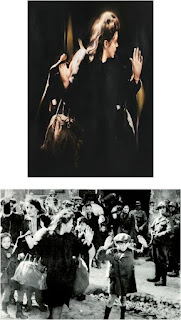
Referencing an iconic photograph of Nazi soldiers clearing out the Warsaw Ghetto taken by the Nazi photographer Franz Konrad in 1943, Nir Hod’s paintings at Paul Kasmin Gallery focus on the anonymous woman rather than the iconic boy. The “Boy from Warsaw,” as he is known, has been the primary focus of this horrific photograph and has become a symbol of the Holocaust. By focusing on the woman, Hod named “Mother,” Hod asks the viewer to consider her. Details here. Top: Nir Hod, Mother, 2011, oil on canvas. Bottom: Franz Konrad’s photograph of “Boy from Warsaw.


”http://27.media.tumblr.com/tumblr_m1nj2ygyS61qz872lo1_500.jpg


Tuesday, 27 March 2012


Look who's buying art now

March 27, 2012

Greetings!

Visiting last night with one of my really wealthy friends and wandering once more among his many art acquisitions, including a few I'd not seen before, I was once more catching the drift of his habits. He insisted on telling me how much he'd paid for this and that. They seemed big prices for big mediocrity from big names. That's only my opinion--apart from his bad art, he's got some of mine too, so I didn't say a word. He also told me he'd flipped a few, "even in this bad market."

My friend fits the profile of many collectors. They're in it for the game, the name and the fame. Investment is a factor. As well, many collected works are bequeathed to museums where a tax receipt gives year-end relief to the wealthy donor. For some reason, all of my collector friends who fit this profile are men.

Recent studies are showing a sea change in earning power and discretionary spending. In the USA, among couples where both partners work, 40% of the women now earn more than the men. The stats on university attendance are also telling. Sixty percent of students enrolled in higher education are now women. If present trends continue, in twenty-five years women will outnumber men in medicine and law. Physics, engineering and professorships will not be far behind. In studies of families where the male still maintained a higher income than his spouse, discretionary spending decisions are nearly equal. On the other hand, in families where the wife's income is higher, it's the female who makes most of the big decisions. The persistent scenario, frightening to some of the blokes, is that CEO mom goes shopping after work while dad is home feeding crackers to the kids and watching Barney.

And what particular art are these rich gals buying? In my observation, they're not so much interested in the game, name or fame. In the last few years I've not heard one single active female art buyer utter the word "investment." They're more interested in connection, shared experience, life enhancement, tailored quality, nest-and-nurture, soul-polishing, and yes, décor and colour-coordination. Funnily, while women do more measuring than men, big size is not so important. I would be really interested in what gallery owners have to say about this, but women seem often to be making art decisions based on lofty ideals, genuine emotions and high sensibilities. Is it that women have better values than men? More imagination? Better taste? More sense? Or is it just less testosterone?

Best regards,

Robert

PS: "Women are asking what privileges their own breadwinning buys." (Liza Mundy)

Esoterica: In what I call FABE (the Female Art Buying Explosion), women have less hesitancy in collecting women artists. This may be partly because female-run and female-owned galleries have risen dramatically. In the years I've been painting, the percentage of female artists in galleries has slowly crept up. A few galleries now represent more women than men. Considering female artists outnumber male artists 80/20, there is still a way to go.


Current Clickback: "Wet-into-wet" looks at the technique of painting into wet paint. Your comments will be appreciated.

Read this letter online and share what you know about who is buying the art. Live comments are welcome. Direct, illustratable comments can be made at rgenn@saraphina.com

Back by popular demand! One great big fat FREE book!! Yep, a totally free copy of Robert's most celebrated book, The Twice-Weekly LETTERS--960 pages--mailed post-free anywhere in the world, simply by signing up for a Premium Listing before March 31, 2012. If you have work you think the world should see, please check us out. While our listings are mini-websites in themselves, we are particularly good at sending volumes of visitors to websites you may already have. Our service costs $100 per year and we do all the set up, including changing work, etc, as you see fit. If you are thinking about it, please feel free to drop Robert a note. He'll be happy to pass along an opinion as to your work's suitableness.

The Art Show Calendar: If you or your group has a show coming up, put an illustrated announcement on The Painter's Keys site. The longer it's up, the more people will see it. Your announcement will be shown until the last day of your show.

The Workshop Calendar: Here is a selection of workshops and seminars laid out in chronological order that will stimulate, teach, mentor, take you to foreign lands or just down the street. Many of these workshops are recommended by Robert and friends. Incidentally, if you are planning a workshop and have photos of happy people working, feel free to send them to us and we'll include a selection in the workshops feature at no extra charge.

The Painter's Post: Every day new material is going into this feature. Links to art info, ideas, inspiration and all kinds of creative fun can be found in this online arts aggregator.

If a friend is trying to subscribe to the Twice-Weekly Letter via Constant Contact, please let her or him know that confirmation is required and to reply to Constant Contact's confirmation email.

You can also follow Robert's valuable insights and see further feedback on Facebook and Twitter

Featured Responses: Alternative to the instant Live Comments, Featured Responses are illustrated and edited for content. If you would like to submit your own for possible inclusion, please do so. Just click 'reply' on this letter or write to rgenn@saraphina.com

Yes, please go ahead and forward this letter to a friend. This does not mean that they will automatically be subscribed to the Twice-Weekly Letter. They have to do it voluntarily and can find out about it by going to The Painter's Keys website.
Subscribe Free!
Your name and email
address will be kept safe.
To Unsubscribe or Change Your Email Address, please click Safe Unsubscribe or Update Profile/Email Address links found at the bottom of this email.

(c) Copyright 2012 Robert Genn. If you wish to copy this material to other publications or mail lists, please ask for permission by writingrgenn@saraphina.com. Thanks for your friendship. 

Saturday, 24 March 2012


Wet-into-wet

March 23, 2012

Greetings!

You might paint wet-into-wet for several reasons. Lubrication is one of them. Just as an engine runs better with a bit of oil on its parts, so does a painting. Indeed, oil painting works its wonders because the oil medium is slippery and slow to dry and thus passages can be more easily blended, gradated, softened, even removed. Titian, one of oil's earliest technicians and first masters, declared it to be the greatest discovery in all of art.

Another reason to paint wet-into-wet is the compounding of techniques. Even if you're habituated to fast drying acrylics, this doesn't mean you have to be victimized by their limitations. Popular slow-drying acrylics invite the use of lots of paint and permit all kinds of painterly outrageousness in realism and abstraction alike.

A rewarding technique is to really "grease up" (put on an overall layer of slow-drying medium as surface lubricant). In acrylic, you might try using Golden Open Medium as imprimatura. No, I'm not on Golden's payroll. The lubricant layer can be clear or variously tinted and put on with a rag, brush or any number of other tools. After this, your colours slip and slide and mingle with abandon. While requiring above average skill in handling, they can add painterly efficiency, happy accidents, sly gradations and arresting effects.

Acrylic painters in particular need not give drying time a second thought. Even the slowest drying acrylics can be force-dried in hours or less. I find the most fun can be had with the yin and yang between wet and dry. When impasto areas dry they are easily scumbled (generally lighter, brighter colours dry brushed over the slubs and bumps of darker zones). Then, after further drying and further grease-up, it's back to wet-into-wet for fresh new passages. 
  
Perhaps the greatest reason to work wet-into-wet is to achieve a professional look. You might have noticed that the oils, acrylics and watercolours we really love to look at were at one time really wet ones. Further, many pros prefer a fresh look that belies the effort they've put into their work. By encouraging more fluid, cursive and longer flourishes, the professional's prowess is revealed. After that, little dry strokes are not as much fun anymore. 

Best regards,

Robert

PS: "The thicker you paint, the more it flows." (John Singer Sargent) 

Esoterica: Lack of freshness and flow in a painting can often be traced to miserliness on the palette. Sargent advocated, "No small dabs of colour--you want plenty of paint to paint with." Working on a pre-lubed surface with gobs of unsullied paint, Sargent moved in an efficient order: "If you begin with the middle-tone and work up from it toward the darks so that you deal last with your highest lights and darkest darks, you avoid false accents." With wet-into-wet you stand a better chance of maintaining a harmonious whole. Oh, and by the way, too many wet-into-wet strokes and you get "mud, mud, glorious mud." 


Current Clickback: "Your own website" looks at how to create your own website. Your comments will be appreciated.

Read this letter online and share your experience of painting wet-into-wet. Live comments are welcome. Direct, illustratable comments can be made at rgenn@saraphina.com

Back by popular demand! One great big fat FREE book!! Yep, a totally free copy of Robert's most celebrated book, The Twice-Weekly LETTERS--960 pages--mailed post-free anywhere in the world, simply by signing up for a Premium Listing before March 31, 2012. If you have work you think the world should see, please check us out. While our listings are mini-websites in themselves, we are particularly good at sending volumes of visitors to websites you may already have. Our service costs $100 per year and we do all the set up, including changing work, etc, as you see fit. If you are thinking about it, please feel free to drop Robert a note. He'll be happy to pass along an opinion as to your work's suitableness.

The Art Show Calendar: If you or your group has a show coming up, put an illustrated announcement on The Painter's Keys site. The longer it's up, the more people will see it. Your announcement will be shown until the last day of your show.

The Workshop Calendar: Here is a selection of workshops and seminars laid out in chronological order that will stimulate, teach, mentor, take you to foreign lands or just down the street. Many of these workshops are recommended by Robert and friends. Incidentally, if you are planning a workshop and have photos of happy people working, feel free to send them to us and we'll include a selection in the workshops feature at no extra charge.

The Painter's Post: Every day new material is going into this feature. Links to art info, ideas, inspiration and all kinds of creative fun can be found in this online arts aggregator.

If a friend is trying to subscribe to the Twice-Weekly Letter via Constant Contact, please let her or him know that confirmation is required and to reply to Constant Contact's confirmation email.

You can also follow Robert's valuable insights and see further feedback on Facebook and Twitter

Featured Responses: Alternative to the instant Live Comments, Featured Responses are illustrated and edited for content. If you would like to submit your own for possible inclusion, please do so. Just click 'reply' on this letter or write to rgenn@saraphina.com
Yes, please go ahead and forward this letter to a friend. This does not mean that they will automatically be subscribed to the Twice-Weekly Letter. They have to do it voluntarily and can find out about it by going to The Painter's Keys website.
Subscribe Free!
Your name and email
address will be kept safe.
To Unsubscribe or Change Your Email Address, please click Safe Unsubscribe or Update Profile/Email Address links found at the bottom of this email.

(c) Copyright 2012 Robert Genn. If you wish to copy this material to other publications or mail lists, please ask for permission by writingrgenn@saraphina.com. Thanks for your friendship. 
This email was sent to tomlind@rogers.com by rgenn@saraphina.com |  
Painter's Keys | 12711 Beckett Rd. | Surrey | B.C. | V4A 2W9 | Canada